

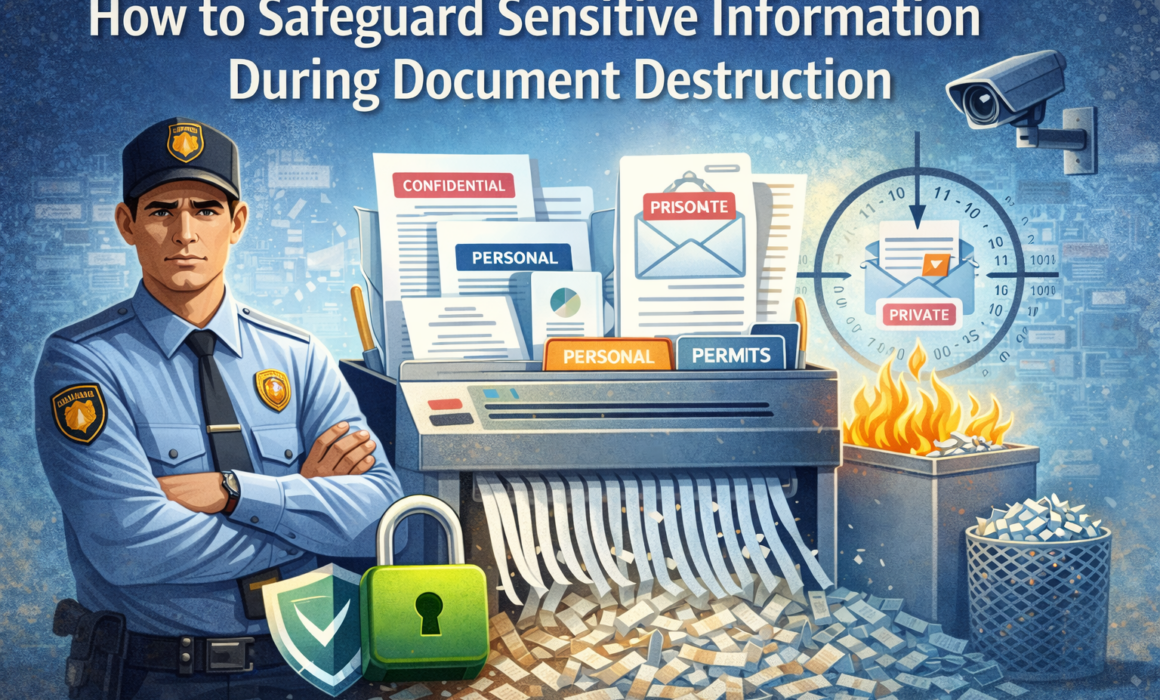
How to Safeguard Sensitive Information During Document Destruction
In today’s data-driven environment, protecting sensitive information doesn’t end when documents are no longer needed. It extends to how those records are destroyed. Improper disposal of confidential materials can expose organizations to data breaches, legal consequences, and reputational harm. A secure and compliant document destruction strategy is essential for businesses of all sizes.
Secure destruction is a critical part of the information lifecycle. From physical records to digital media, proper disposal ensures that both organizational and client data remain protected. This guide explores best practices, compliance requirements, and practical steps to manage document destruction with confidence.
Why Secure Document Destruction Matters
Every organization handles sensitive information, including financial records, employee data, client details, and proprietary documents. When these materials reach the end of their lifecycle, simply discarding them is not a safe option.
Without proper destruction methods, confidential information can be recovered and misused. Secure destruction ensures that documents are rendered completely unreadable and unrecoverable, reducing the risk of unauthorized access. It also helps organizations meet legal and regulatory requirements while maintaining trust with clients and stakeholders.
Key Components of a Secure Document Destruction Process
A strong document destruction strategy is built on several essential components that ensure security, accountability, and compliance at every step.
Secure Shredding Compliance
Compliance is the foundation of any effective destruction program. Organizations must follow applicable privacy laws and industry standards to ensure that sensitive information is handled properly.
Secure shredding compliance means that documents are destroyed beyond reconstruction, processes meet regulatory standards, trained professionals handle sensitive materials, and proper audit trails are maintained. Following these practices reduces liability and ensures that organizations remain aligned with legal requirements.
Chain of Custody Tracking
Maintaining control over documents throughout the destruction process is critical. Chain of custody tracking ensures that records are monitored from the moment they are collected until they are fully destroyed.
This process documents who handled the materials, when they were transferred, where they were stored, and how they were ultimately disposed of. By maintaining this level of visibility, organizations can prevent mishandling and ensure accountability while creating a clear audit trail.
Certificate of Destruction
After documents are destroyed, organizations should receive formal confirmation in the form of a certificate of destruction. This document verifies that materials were securely and properly disposed of.
It typically includes details such as the date and time of destruction, the method used, a description of the materials, and confirmation of compliance with relevant regulations. This certificate serves as proof for audits, internal policies, and legal requirements.
On-site vs Off-site Shredding
Organizations often choose between on-site and off-site shredding depending on their needs. On-site shredding allows documents to be destroyed at the organization’s location, providing immediate verification and added peace of mind, especially for highly sensitive materials.
Off-site shredding involves transporting documents to a secure facility equipped with industrial-grade equipment. This option is often more cost-effective for large volumes while still maintaining strict security protocols and chain of custody procedures.
Choosing the right approach depends on the level of sensitivity, volume of documents, and operational requirements.
Best Practices for Safeguarding Information During Destruction
To ensure maximum security, organizations should adopt a set of best practices that support a consistent and reliable destruction process.
Clear policies should be established to define what documents need to be destroyed and when. Retention schedules help reduce risk by ensuring that records are not kept longer than necessary.
Locked collection containers should be used to store documents awaiting destruction. These secure bins prevent unauthorized access and should be regularly serviced.
Working with an experienced and trusted provider helps ensure that destruction processes are handled securely and in compliance with regulations. Proper training for employees is also essential so that everyone understands and follows correct procedures.
Maintaining thorough documentation, including certificates of destruction and chain of custody records, is important for audits and ongoing compliance.
Beyond Paper: Destroying Digital Media
Document destruction is no longer limited to paper records. Organizations must also securely dispose of digital storage devices such as hard drives, USB devices, backup tapes, and optical media.
Simply deleting files is not sufficient, as data can often be recovered. Secure destruction of digital media requires physical destruction or specialized data wiping techniques to ensure that information cannot be retrieved.
Including digital media in your destruction strategy ensures complete protection across all formats.
How Secure Shredding Prevents Corporate Espionage
Corporate espionage is an increasing concern for organizations that handle sensitive or proprietary information. Improperly discarded documents can provide valuable insights to competitors or malicious actors.
Secure shredding eliminates this risk by ensuring that confidential data is completely destroyed and cannot be reconstructed. Controlled handling throughout the process and proper documentation further reduce the likelihood of unauthorized access.
By implementing strong destruction practices, organizations can significantly lower their exposure to data theft.
Integrating Document Destruction into Information Management
Document destruction should be part of a broader information management strategy rather than a standalone task. A comprehensive approach ensures that information is protected throughout its entire lifecycle.
This includes digitizing physical records, securely storing and managing data, implementing retention policies, and ensuring compliant destruction when records are no longer needed. Integrating these steps creates a seamless system that supports both efficiency and security.
Choosing the Right Partner
Safeguarding sensitive information during document destruction requires a structured and reliable approach. From maintaining compliance and tracking chain of custody to obtaining proper documentation, every step plays a role in protecting your organization.
Partnering with an experienced provider ensures that destruction processes are handled securely and efficiently. Whether choosing on-site or off-site shredding, the key is to implement a well-documented system that aligns with your overall information management strategy.
With the right approach in place, organizations can confidently manage document destruction while reducing risk, maintaining compliance, and protecting valuable data.