

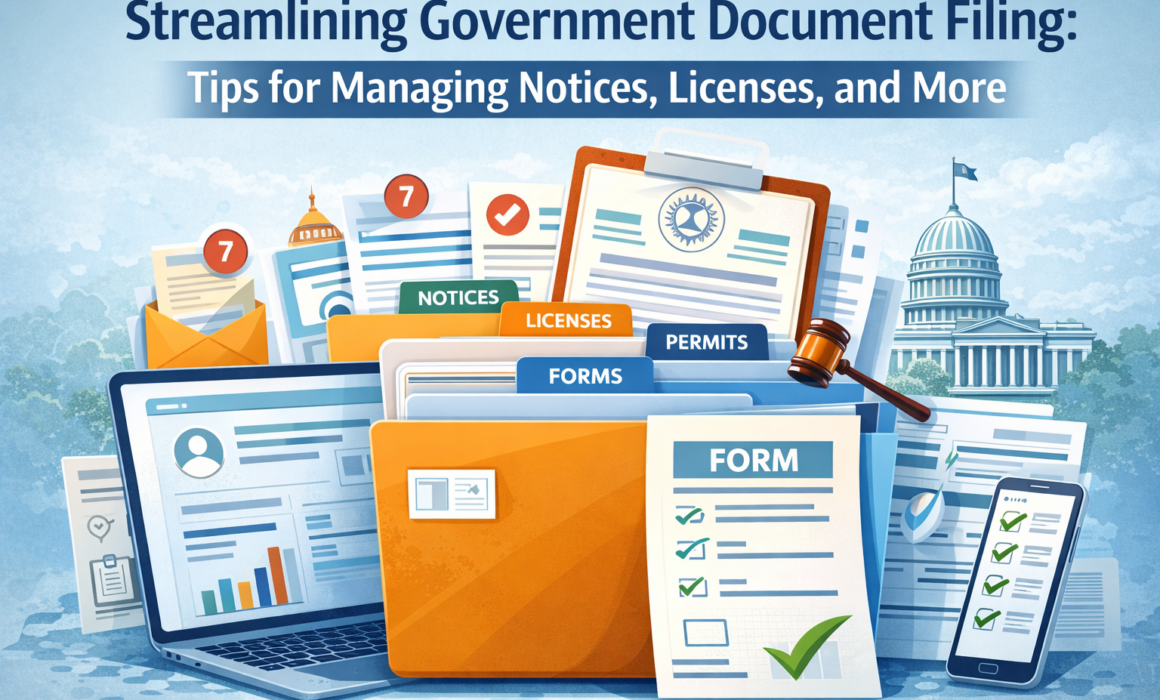
Streamlining Government Document Filing: Tips for Managing Notices, Licenses, and More
Managing government records is no small task. From permits and licensing documents to notices, legal files, and historical archives, municipalities and public sector organizations handle massive volumes of information, often under strict regulatory requirements. Without efficient systems in place, document filing can quickly become time-consuming, disorganized, and prone to costly errors.
For organizations looking to modernize their workflows, investing in document scanning solutions for cities and municipal governments is one of the most effective ways to improve efficiency. With the right expertise, government teams can transition from paper-heavy processes to secure, streamlined, and fully searchable digital systems.
This guide explores practical ways to improve document management and highlights how digitization can transform how public sector organizations manage critical records.
The Challenge of Government Document Filing
Government offices process a wide range of documents every day. These include notices and correspondence, permits and licenses, planning and development files, legal and compliance records, and historical archives such as microfilm and microfiche.
These records often need to be stored for long periods while remaining easily accessible to staff and the public. Traditional paper-based systems introduce several challenges. Physical storage requirements continue to grow, increasing costs and limiting space. Retrieving documents can take significant time, especially when records are misfiled or stored across multiple locations. There is also a higher risk of lost or damaged files, along with ongoing difficulty maintaining compliance with privacy and regulatory standards.
Because of these issues, many municipalities are adopting document digitization as a long-term solution.
Why Digitization Is Key to Streamlining Filing Systems
Digitization goes beyond simply scanning documents. It creates a more intelligent and accessible system for managing records.
By converting paper files into digital formats, organizations can make documents searchable, improve access across departments, and reduce reliance on physical storage. Digitization also helps improve accuracy and consistency by minimizing manual handling.
With the right processes in place, digitized records become easier to manage, share, and secure, supporting both operational efficiency and regulatory compliance.
Tip #1: Centralize Your Document Management System
A centralized digital repository is one of the most effective ways to improve document filing. Instead of storing records in multiple physical locations or disconnected systems, all files are kept in one organized and secure environment.
This allows staff to access documents instantly without searching through filing cabinets or requesting files from other departments. It also ensures consistent naming conventions and reduces duplication, helping maintain a cleaner and more reliable records system.
Tip #2: Use OCR for Searchable Records
Optical Character Recognition plays a key role in making digitized records truly useful. It converts scanned images into searchable text, allowing users to find specific information quickly.
With OCR in place, staff can locate documents or keywords in seconds instead of manually reviewing files. This significantly reduces time spent on searches and improves overall productivity across departments.
Tip #3: Automate Metadata and Indexing
Even in digital systems, organization is critical. Without proper indexing, files can become just as difficult to locate as paper records.
Automating metadata and indexing during the scanning process helps ensure that documents are categorized accurately. Files can be tagged by date, department, document type, or other relevant criteria. This reduces manual data entry and minimizes errors while improving searchability and consistency.
For high-volume environments, automation is especially valuable in maintaining efficiency and accuracy.
Tip #4: Prioritize Security and Compliance
Government records often contain sensitive or confidential information, making security a top priority. Any digitization strategy must include strong safeguards for both physical and digital records.
Secure handling processes, controlled access, and protected file formats help prevent unauthorized access. At the same time, organizations must ensure compliance with privacy regulations and data protection standards.
A well-implemented digital system enhances both transparency and accountability while protecting sensitive information.
Tip #5: Digitize Legacy Records and Archives
Many government organizations still rely on older storage formats such as microfilm and microfiche for historical records. While these formats were once effective, they can be difficult to access and maintain over time.
Digitizing legacy records helps preserve important historical information while making it easily searchable and accessible. It also reduces the risk of deterioration and ensures that valuable archives remain usable for future generations.
Bringing these older records into a digital system is an important step toward modernizing overall document management.
Tip #6: Improve Workflow Efficiency Across Departments
Digitization does more than improve storage; it changes how teams operate. Digital systems allow staff to access documents remotely and collaborate more effectively across departments and locations.
Processes such as approvals for permits and licenses can be completed faster, reducing delays and improving service delivery. By integrating digital records into daily workflows, organizations can eliminate bottlenecks and create smoother, more efficient operations.
Tip #7: Choose an Experienced Digitization Partner
Selecting the right partner is critical for successful digitization. Government organizations need providers with experience handling complex records, advanced technology, and strong quality control processes.
An experienced partner ensures that documents are digitized accurately, securely, and in a way that aligns with long-term goals. This support helps organizations build scalable systems that can adapt to future needs while maintaining high standards of quality and compliance.
The Benefits of Streamlined Government Filing
Implementing a modern document management strategy offers significant advantages. Organizations gain faster access to information, reduce operational costs, and improve compliance with regulatory requirements.
Digitized systems also enhance service delivery by allowing staff to respond quickly to requests and make better-informed decisions. With improved data accuracy and stronger security, organizations can operate with greater confidence and efficiency.
Ultimately, streamlining document filing is about more than improving processes. It enables government teams to focus on what truly matters—delivering better services and support to their communities.