
From Analog to Digital: The Wild Ride of Converting Old Media
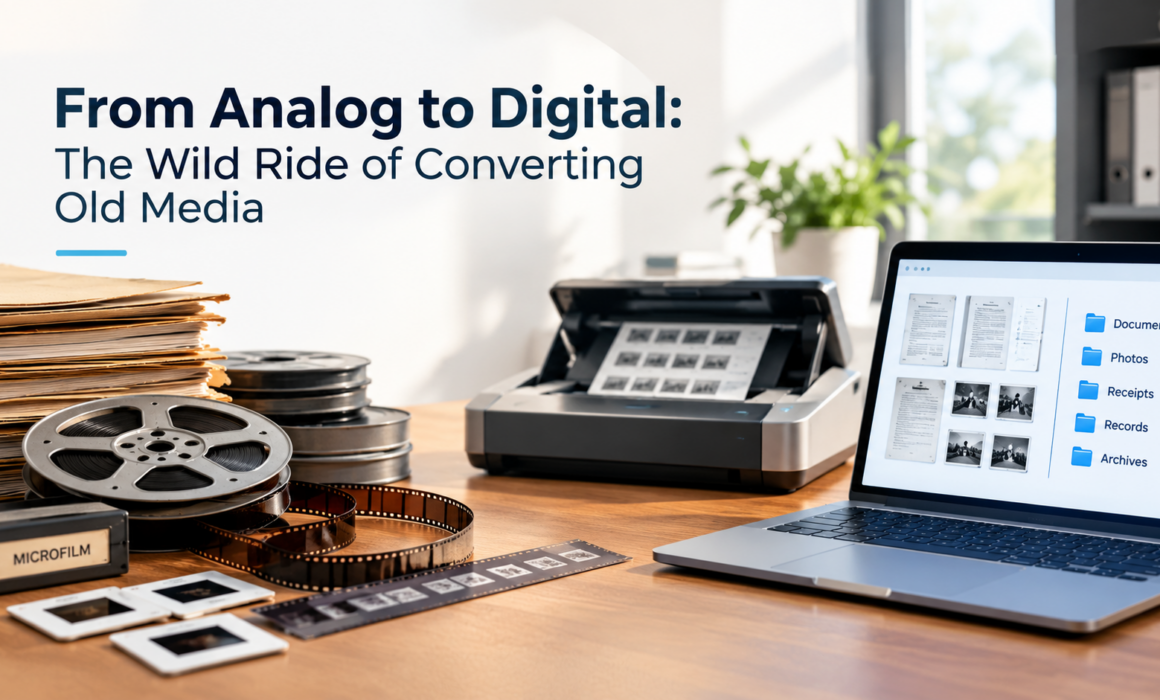
The transition from analog to digital formats has been one of the most significant changes in how organizations preserve and access information. From bound volumes and fragile manuscripts to film, microfilm, and photographs, many historical records were created long before digital storage was even imaginable. Today, converting these materials into digital formats allows organizations to protect valuable information while making it far easier to access and share.
At Consentia, we work with organizations that hold decades—or even centuries—of information in legacy formats. Digitizing these records isn’t always straightforward. Many older materials were never designed to be scanned, and preserving their condition while capturing high-quality digital copies requires specialized equipment and expertise.
The Challenge of Digitizing Fragile Materials
Older books, bound documents, and archival materials can be surprisingly delicate. Over time, adhesives weaken, paper becomes brittle, and bindings can deteriorate. Attempting to digitize these materials using traditional scanning methods can risk damaging the original work.
Historically, some scanning approaches required flattening books or applying pressure to the spine so that pages could be captured by a flatbed scanner. In more extreme cases, the spine of a book would be cut so that pages could be scanned individually. While this method might speed up the scanning process, it permanently destroys the original binding and compromises the integrity of the work.
For organizations preserving rare publications, historical records, or archival collections, that level of risk simply isn’t acceptable.
A Preservation-First Approach to Digitization
Modern book scanning technology has changed the way fragile materials are digitized. Instead of forcing documents flat, specialized scanning systems gently support the book while capturing high-resolution images of each page.
These systems allow both pages of an open book to be captured at once, including content close to the binding. Because the material is supported rather than pressed flat, there is minimal strain placed on the spine or paper. This preservation-focused approach is especially valuable for archival works where maintaining the physical condition of the original document is just as important as capturing its contents.
For libraries, archives, government agencies, and research institutions, this means valuable materials can be digitized without sacrificing their historical integrity.
Beyond the Scan: Refining the Digital Image
Digitization doesn’t end once the pages are photographed or scanned. Raw images often require careful processing before they are ready for use. Technicians review each image to ensure it meets quality standards and accurately reflects the original document.
This process can include cropping pages, adjusting colour balance, correcting distortions, and improving overall image clarity. Once optimized, the images are converted into accessible digital formats that allow users to search, share, and store the material efficiently.
The result is a digital version that maintains the visual character of the original work while making it dramatically easier to access and distribute.
Why Analog Conversion Matters Today
Many organizations still hold valuable information locked away in analog formats. While these materials may have served their purpose for decades, they are increasingly difficult to access and preserve. Physical degradation, limited accessibility, and storage challenges all contribute to the urgency of digitization efforts.
Converting analog media into digital archives helps protect these records for the future. Digital files can be duplicated for backup, shared instantly across organizations, and integrated into modern document management systems. What once required hours of manual searching through shelves or storage boxes can now be retrieved with a few keystrokes.
Preserving the Past While Preparing for the Future
Digitizing legacy media is about more than convenience—it is about safeguarding information. Whether the materials involve historical books, archival records, or specialized media formats, careful digitization ensures that valuable content is preserved while the original items remain protected.
Consentia’s digitization services are designed to balance preservation with accessibility. By using specialized equipment and proven workflows, we help organizations convert aging analog collections into secure, high-quality digital archives.
The journey from analog to digital can be complex, but when handled correctly, it ensures that important records continue to be available, usable, and protected for generations to come.