

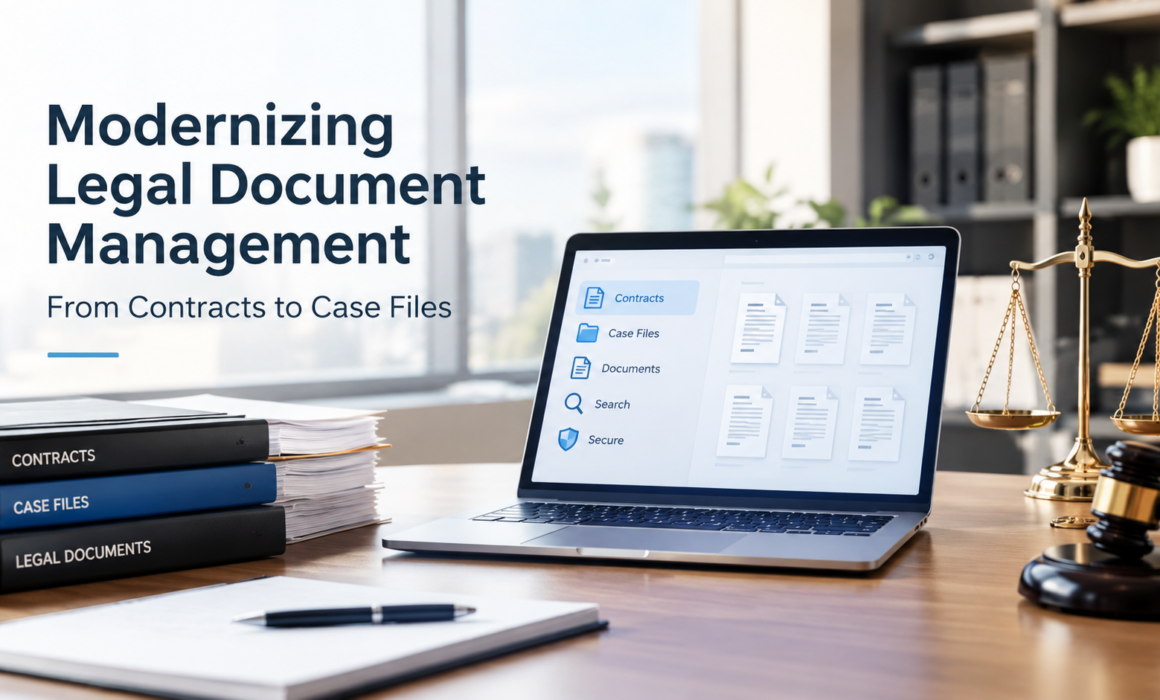
Modernizing Legal Document Management: From Contracts to Case Files
Legal practices manage some of the most information-intensive records of any industry. From contracts and court filings to correspondence and case files, law firms accumulate large volumes of documents that must be organized, secure, and easily accessible. As legal teams continue to modernize their operations, document digitization has become a practical way to manage these records more efficiently.
At Consentia, we work with organizations—including legal professionals—that need reliable methods for converting paper-based records into structured, searchable digital systems. For law firms handling decades of documentation, digitization can dramatically improve how information is stored, retrieved, and protected.
Why Legal Records Are Challenging to Manage on Paper
Paper files have traditionally been the backbone of legal recordkeeping, but over time they create operational challenges. Case files can span hundreds or thousands of pages, and when multiple copies are made for internal use, storage requirements grow quickly.
Beyond storage, legal professionals must maintain complete and well-organized documentation for every case. Files may need to be accessed years later for litigation, compliance, or historical reference.
Some common challenges with paper-based legal records include:
- Limited office space due to filing cabinets and archive storage
- Difficulty locating specific documents quickly during active cases
- Risks of lost or misfiled records
- Time spent by staff searching for physical files instead of performing billable work
Digitizing legal records helps address these issues by creating structured digital archives that can be searched and accessed instantly.
How Digitization Improves Legal Document Management
The shift from paper files to digital records changes how legal teams interact with information. Instead of manually locating physical folders, digital systems allow staff to retrieve documents in seconds using keywords, client names, or case numbers.
Modern digital document systems also support legal workflows by making it easier to share files internally or externally when required.
Key benefits of digitizing legal documents include:
- Faster document retrieval when responding to client requests or court inquiries
- Improved organization through indexing and searchable metadata
- Better collaboration when multiple team members need access to the same files
- Reduced physical storage requirements for offices and archives
- Enhanced records security through controlled digital access
For legal professionals who work with long-term clients or ongoing matters, quick access to historical files can significantly improve responsiveness and service quality.
Supporting Compliance and Disclosure Requirements
Legal practices often need to produce documentation during audits, litigation, or regulatory reviews. When records exist only in paper form, gathering all relevant documents can require hours or days of manual searching.
Digital archives streamline this process by allowing teams to retrieve and compile records quickly. Because files are indexed and searchable, it becomes far easier to locate the exact documents required for disclosure or case preparation.
Digital records management also helps law firms maintain organized archives for long-term retention—an important consideration in an industry where records may need to be preserved for many years.
Creating More Efficient Workspaces
Beyond improving document access, digitization can also transform how legal offices use their physical space. Filing cabinets and storage rooms often occupy valuable office real estate that could otherwise be used for meeting areas, collaborative workspaces, or additional staff.
By converting large volumes of paper records into digital files, law firms can significantly reduce their reliance on physical storage while maintaining complete access to their records.
This shift allows legal professionals to focus more time on client work and less on administrative tasks related to managing paper documents.
Helping Legal Teams Transition to Digital Records
Consentia has decades of experience helping organizations transition from paper-based record systems to secure digital environments. Our digitization services support the careful handling, scanning, and indexing of legal documents so firms can maintain accuracy and confidentiality throughout the process.
For legal teams managing contracts, case files, and client documentation, modernizing records management through digitization offers a practical path toward improved efficiency, stronger security, and better access to critical information.
As legal work continues to evolve in a digital-first environment, having reliable access to well-organized digital case files ensures firms are prepared to meet both operational and regulatory demands—today and in the future.