Microfiche & Microfilm Conversion Services in BC: Preserve Historical Records Digitally
Across British Columbia, organizations are sitting on decades of valuable information stored on microfiche and microfilm. From municipal archives and land records to healthcare files, engineering drawings, and historical newspapers, these formats once represented the gold standard for long-term storage. Today, however, aging film media presents growing risks.
Physical degradation, limited access, obsolete readers, and disaster exposure are driving a renewed urgency for microfiche scanning BC and microfilm digitization. Digitizing these records ensures preservation, improves accessibility, and protects irreplaceable information for future generations.
Why Microfiche and Microfilm Are at Risk
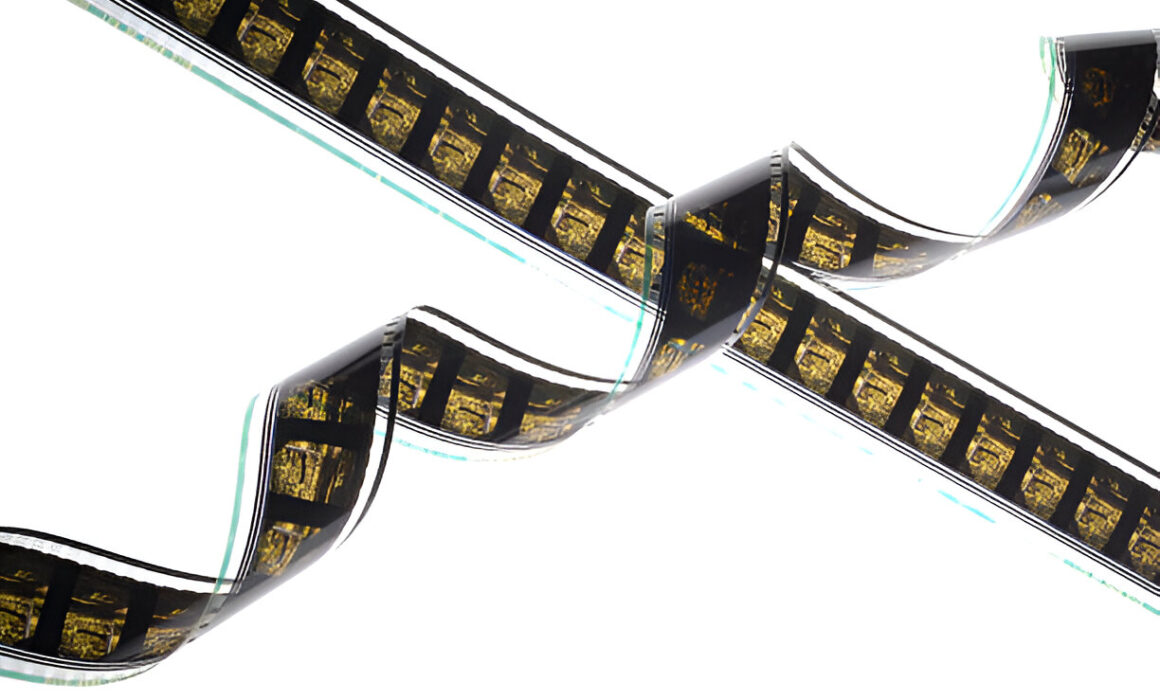
Microfiche and microfilm were designed to last decades, but they are not immune to time. Improper storage conditions, humidity, mold, scratches, vinegar syndrome, and handling wear can all compromise film integrity.
As readers and replacement parts become harder to find, accessing information stored on film becomes increasingly difficult. Digitization eliminates reliance on outdated hardware while ensuring records remain usable, searchable, and secure.
For organizations responsible for historical, legal, or regulated records, delaying conversion increases the risk of permanent information loss.
The Value of Microfiche Scanning in BC
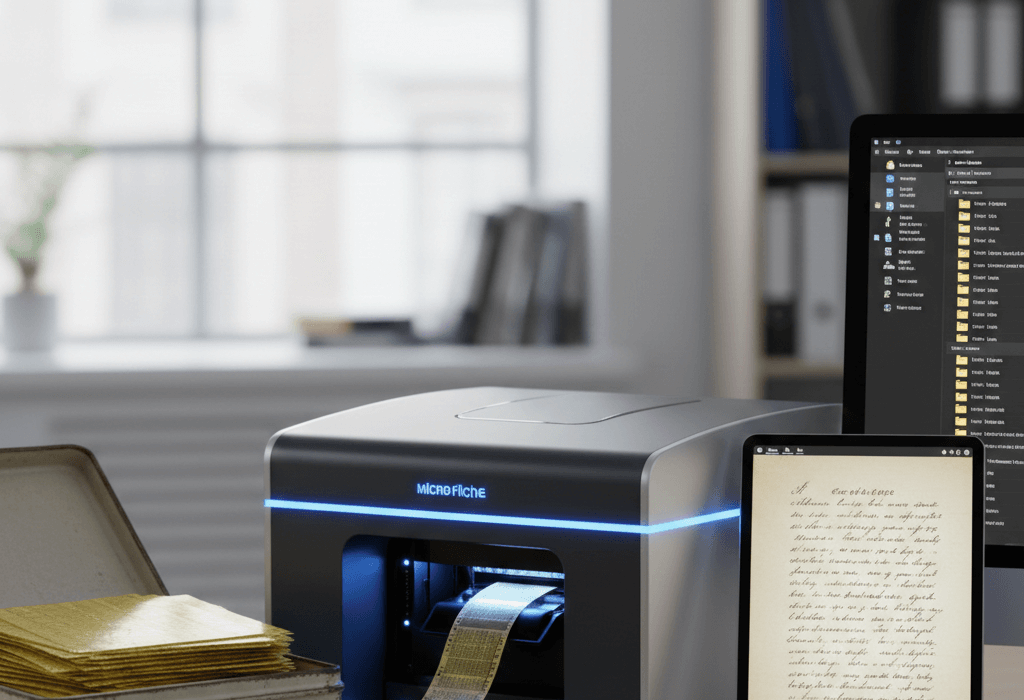
Microfiche scanning BC services transform film-based records into high-quality digital files without damaging the originals. These files can be stored securely, indexed for search, and accessed by authorized users from anywhere.
Digitization provides several key benefits:
- Improved access for staff and researchers
- Reduced handling of fragile originals
- Protection against fire, flood, and physical deterioration
- Compliance with modern records management standards
- Long-term preservation through redundant digital storage
For public sector organizations, libraries, utilities, and private companies, microfiche scanning supports transparency, efficiency, and continuity.
Microfilm Digitization for Archives and Institutions
Microfilm digitization is especially valuable for large archives such as newspapers, maps, land titles, court records, and engineering drawings. High-resolution scanning captures fine detail, ensuring that even small text and faded images remain legible.
Professional archival scanning British Columbia services follow best practices for handling sensitive materials, maintaining chain of custody, and preserving image integrity. This is essential when working with unique or irreplaceable records.
Digitized microfilm can be converted into searchable PDFs, TIFFs, or database-ready formats depending on organizational needs.
Preserving History Through Digital Conversion
For museums, municipalities, Indigenous organizations, and historical societies, historical records conversion BC plays a critical role in preservation. Digitization allows organizations to share collections with the public while protecting fragile originals from frequent handling.
Digital archives also support disaster recovery planning. In the event of physical loss, digital copies ensure information survives even if originals do not.
Preserving history is not just about storage, but about access. Digital formats allow records to be searched, cross-referenced, and analyzed in ways that film never allowed.
Film to Digital Service: More Than Just Scanning
A professional film to digital service includes more than image capture. It involves inspection, cleaning, calibration, quality control, and indexing. Each step ensures the final digital files are accurate, readable, and reliable.
Metadata tagging and indexing allow organizations to locate records quickly without manually scrolling through reels or sheets. This dramatically improves productivity and reduces research time.
For regulated industries, digital files can also be integrated into existing document management systems.
Serving Organizations Across British Columbia
Whether you are located in Vancouver, Victoria, the Fraser Valley, the Interior, or Northern BC, professional microfiche scanning service providers offer province-wide pickup and secure transport.
This makes digitization accessible even for organizations without local scanning facilities, ensuring consistent quality and security regardless of location.
Frequently Asked Questions
Can you digitize damaged microfiche or microfilm?
Yes. Many damaged or aging films can still be digitized. Specialized handling techniques and advanced scanners allow recovery of information from scratched, faded, or brittle media. While results depend on the condition of the original, digitization often preserves more information than continued physical storage.
What resolution do you scan archival records at?
Archival scanning is typically performed at high resolutions ranging from 300 to 600 DPI or higher, depending on content type. This ensures fine text, diagrams, and images are captured clearly and meet long-term preservation standards.
Can you index historical records for easier search?
Yes. Indexing and metadata creation are key components of professional archival scanning British Columbia services. Records can be indexed by date, reference number, subject, or custom fields to enable fast, accurate search and retrieval.
Do you pick up film reels anywhere in BC?
Yes. Secure pickup and transport services are available throughout British Columbia. Chain-of-custody procedures ensure films are protected from the moment they leave your facility until digitization is complete.
How long does digitization take?
Project timelines depend on volume, film condition, resolution requirements, and indexing complexity. Small projects may take days, while large archives may require several weeks. A detailed assessment provides accurate timelines before work begins.
Choosing the Right Microfiche and Microfilm Conversion Partner
Not all digitization services are equal. Organizations should look for experience with archival materials, secure handling procedures, Canadian data compliance, and proven quality control processes.
By investing in microfiche scanning BC and microfilm digitization, organizations protect their past while preparing for the future. Digital preservation ensures historical records remain accessible, secure, and usable for decades to come.